Systems of Linear Equations
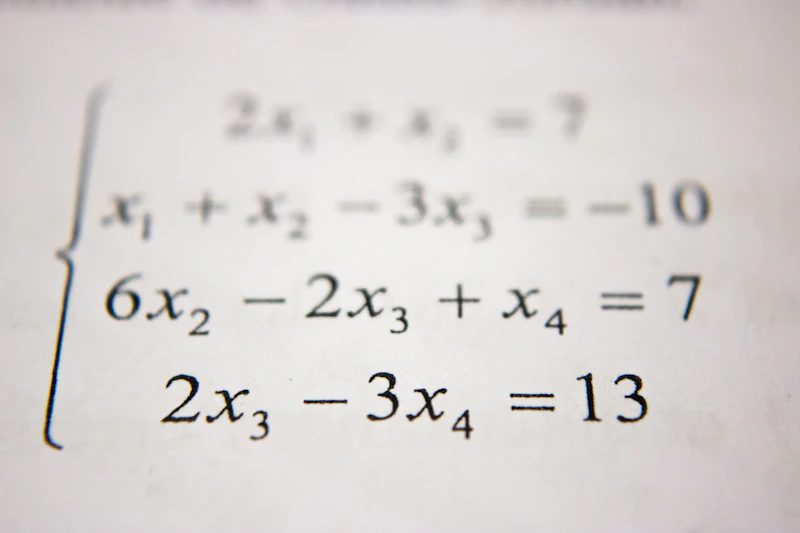
A system of linear equations consists of two or more linear equations with the same variables. Solving the system means finding values for all variables that satisfy every equation simultaneously.
Graphical Method
Graph each equation on the same coordinate plane. The solution is the point where the lines intersect. This works well for 2x2 systems but becomes impractical for larger ones.
Substitution
Solve one equation for one variable, then substitute into the other equation. For example, if x + y = 5 and 2x - y = 4, solve the first for y = 5 - x, substitute into the second: 2x - (5-x) = 4, giving 3x = 9, so x = 3 and y = 2.
Elimination
Add or subtract equations to eliminate one variable. This is often the fastest method for 2x2 and 3x3 systems.
Matrix Methods
Gaussian elimination, Cramer’s rule, and matrix inversion all provide systematic methods for solving systems of any size. These methods are the foundation of numerical linear algebra and are implemented in every scientific computing library.
Use our System of Equations Solver for 2x2 systems and our Matrix Calculator for larger systems.